
Psychosocial safety: what's changed and what leaders need to know
Safe Work Australia's code on managing psychosocial hazards has shifted leadership expectations. A plain-English overview of what's required and how to lead in practice.
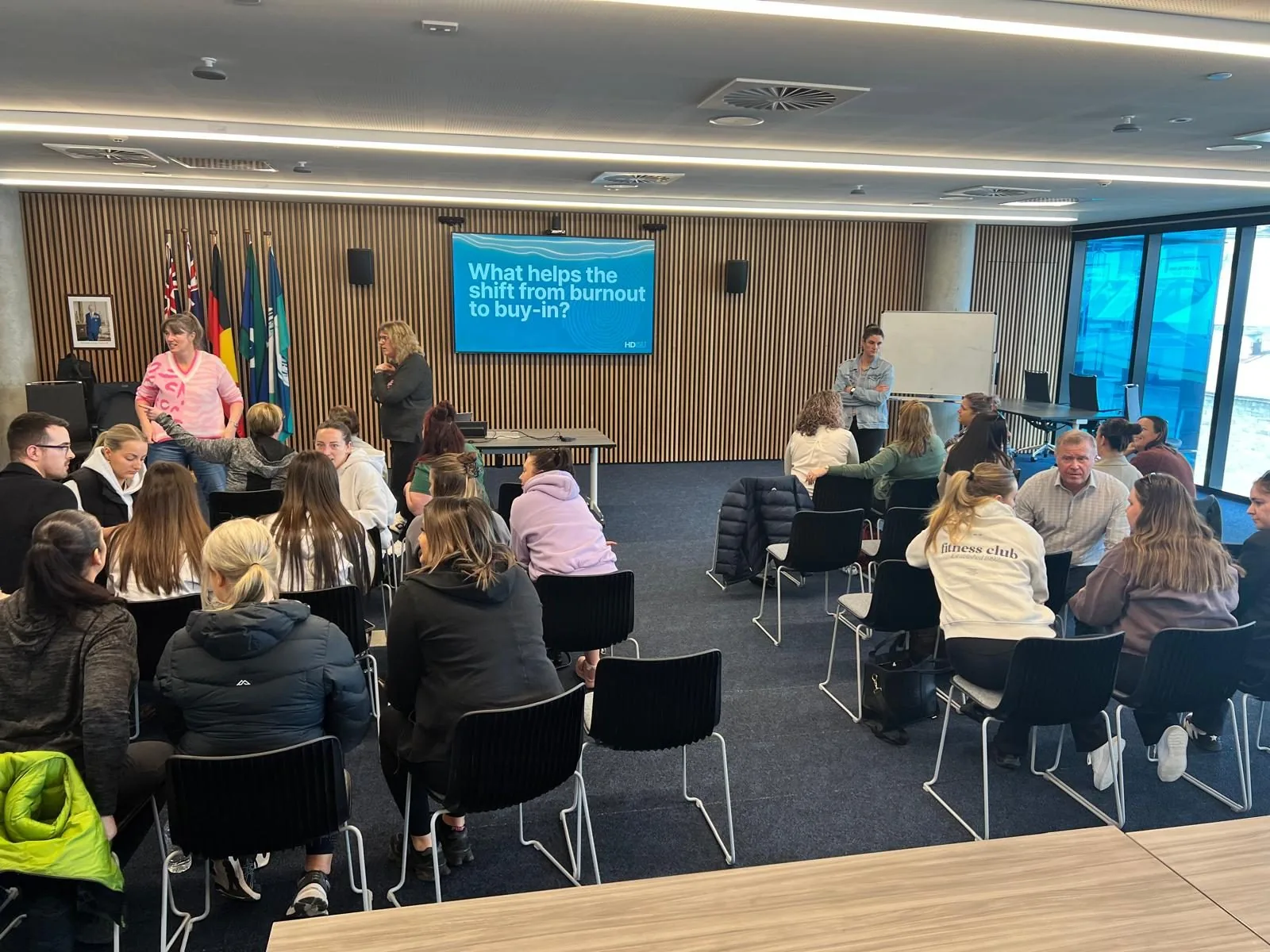
For most of WHS history, "safety" meant physical safety. Hard hats, ergonomic chairs, manual handling. The recent shift, formalised in Safe Work Australia's Model Code of Practice on Managing Psychosocial Hazards at Work, extends that same duty of care to the psychological wellbeing of your team.
This isn't optional, and it isn't soft. Psychosocial hazards now sit alongside physical hazards in your WHS obligations. If you're a leader, here's what you actually need to know.
What counts as a psychosocial hazard?
Safe Work Australia identifies these as the main categories worth attending to:
- Job demands, workload, pace, complexity, emotional labour, conflicting demands
- Low job control, lack of autonomy over how, when, or where work gets done
- Poor support, inadequate supervision, training, or peer support
- Lack of role clarity, unclear expectations, conflicting instructions, role ambiguity
- Poor organisational change management, change done to staff rather than with them
- Inadequate recognition and reward, including pay, but also acknowledgement
- Poor workplace relationships and interactions, interpersonal conflict, exclusion, hostile communication
- Violence and aggression, including from customers, clients, the public
- Bullying and harassment
- Traumatic events or material, exposure to distressing content, situations, or outcomes
- Remote or isolated work, physical or psychological isolation from colleagues
- Poor physical environment, when physical conditions contribute to psychological strain
These aren't theoretical. Every workplace has some level of exposure to most of these, every day. The question isn't whether they exist, it's how well you're managing them.
What leaders are now expected to do
The four-step risk management process you already apply to physical hazards now applies to psychosocial ones:
- Identify the psychosocial hazards in your workplace
- Assess the risk they pose (likelihood × consequence)
- Control the risks using the hierarchy of controls (eliminate where possible, substitute where not, administrative controls last)
- Review your controls regularly
Critically, psychosocial risk management is treated as a continuous responsibility, not a once-a-year survey. Leaders are expected to actively look for psychosocial risk in the way work is designed and managed, not just respond when something blows up.
Common pitfalls we see
From running our Psychosocial Safety Leadership program, the most common mistakes are:
- Treating wellbeing as an HR programme rather than a leadership responsibility. EAP and yoga don't substitute for redesigning a role that's structurally unsustainable.
- Reacting to incidents instead of preventing them. If your only psychosocial conversation happens after someone takes leave, you're already behind.
- Confusing kindness with safety. A leader can be deeply caring and still preside over a psychologically unsafe team. The systems matter more than the individual disposition.
- Avoiding difficult conversations. Unaddressed conflict, unclear expectations, and unspoken issues are some of the highest-impact psychosocial hazards.
- Over-relying on surveys. Engagement surveys are a lagging indicator. Leaders who only "know how the team is going" via the annual survey are not in regular enough contact.
What good leadership looks like
In practice, leaders who manage psychosocial risk well tend to do these things consistently:
- Regular, low-stakes check-ins. Not "do you have any issues" but "what's the work feeling like right now?"
- Clear role expectations, written down where possible, revisited when work changes
- Workload conversations that are real. Acknowledging when something is genuinely too much and adjusting, not just sympathising
- Conflict addressed early. Within days, not weeks. Tough conversations rather than escalation.
- Change management that involves the team in the design of how the change happens, not just announcement
- Recognition that's specific and timely, not generic, not delayed
- Modelling the behaviour they expect, including taking leave, not emailing at midnight, asking for help
Where training fits
You can't policy your way to psychosocial safety. But you also can't expect leaders to do this work without giving them frameworks and practice opportunities. The two key training inputs are:
- For your team: psychological safety basics, what to expect from leaders, how to raise concerns, when to escalate
- For your leaders: practical skills in spotting risk, having tough conversations, designing sustainable work, managing change
Our Psychosocial Safety Leadership program addresses the leader side specifically, practical, scenario-driven, no jargon, designed for people who don't have time to read a 200-page code of practice in detail.
Get in touch if you'd like to talk through how it might work for your team.